
Overhead Crane Workflow Integration: Maximising Industrial Throughput
22 April 2026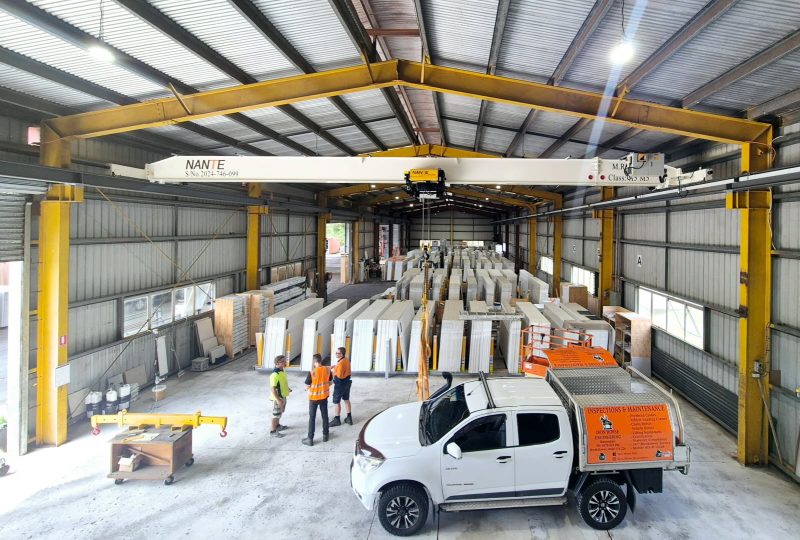
Upgrade your facility with overhead crane workflow integration in Melbourne. Hydromech Hoist and Crane ensures compliance and seamless material handling.
Industrial productivity depends on controlled material movement and coordinated lifting systems. Overhead crane workflow integration strengthens internal logistics by aligning crane travel paths with fabrication areas, storage zones, and dispatch sequencing. Structured planning helps reduce idle time, limits unnecessary load handling, and promotes steady throughput across operational environments.
Aligning Lifting Systems with Production Demands
Manufacturing schedules require lifting systems that operate in sync with production flow. Overhead crane workflow integration connects overhead crane systems with workstation positioning and load sequencing to support material handling efficiency across departments. Defined lifting zones and mapped crane travel routes assist in maintaining safer load transfer and consistent production continuity.
Clear coordination between operators, supervisors, and maintenance teams reduces congestion within high-traffic areas. Structured system alignment also supports predictable cycle times while maintaining mechanical reliability and operational clarity.
Planning Considerations for Coordinated Crane Operations
Effective integration begins with a practical review of site layout, lifting demand, and structural capacity. Facility managers should assess workflow patterns and crane classification requirements before installation or upgrades.
The following technical considerations influence long-term performance:
- Load Path Mapping: Clearly defined crane travel routes minimise interference with fixed plant equipment and pedestrian zones while improving operational visibility.
- Workstation Alignment: Strategic bridge and runway positioning reduces unnecessary trolley travel and shortens lifting cycles between fabrication stages.
- Control Configuration: Selection of pendant, radio remote, or cabin controls must align with operational complexity and operator competency requirements.
- Duty Classification Review: Accurate crane classification ensures mechanical components are suited to lifting frequency and load intensity over time.
- Service Access Provision: Planned maintenance clearances enable safe inspection and routine servicing, helping maintain equipment condition and reliability.
These measures align with accepted Australian engineering practices and support compliance-focused lifting system design.
Implementing Overhead Crane Workflow Integration in Operational Facilities
Existing facilities require staged evaluation before structural or mechanical modifications are introduced. Structural integrity, runway alignment, electrical capacity, and lifting frequency must be assessed before proceeding with overhead crane workflow integration.
Compliance with Australian Standards, including AS 2550 and AS 1418 governing crane design and operation, remains fundamental to system installation. At Hydromech Hoist and Crane, we integrate these crane compliance requirements into engineered systems to support safe operation and regulatory alignment across the Australian industry.
Integration must complement established production processes without creating operational strain. We evaluate spatial limitations, lifting requirements, and workflow sequencing to ensure crane installations enhance efficiency while maintaining structural and mechanical integrity.
Strengthening Industrial Throughput Through Engineered Crane Systems
Consistent throughput relies on lifting systems that align with operational structure rather than function independently of it. Planned coordination between crane systems and production flow supports safer lifting conditions and predictable material movement across industrial sites.
Hydromech Hoist and Crane integrates engineered lifting systems tailored to Australian operational requirements. Through structured system design, installation, and ongoing servicing, we support improved industrial performance through overhead crane workflow integration that reflects practical site demands and compliance expectations.
Contact us to optimise material handling and strengthen production efficiency with engineered crane systems built for the Australian industry.
Related Blog Articles:
Engineered Overhead Crane Safety Upgrades for Operator Protection and Equipment Reliability
Overhead Crane Manufacturer Australia: Enhancing Container Handling and Cargo Flow in Ports
Overhead Crane and Hoist Maintenance for Seamless Heavy Industry Performance
Optimized by: Netwizard SEO