
Hoist Mounting Systems: Foot-Mount vs Side-Mount Options for Industrial Crane Design
09 April 2026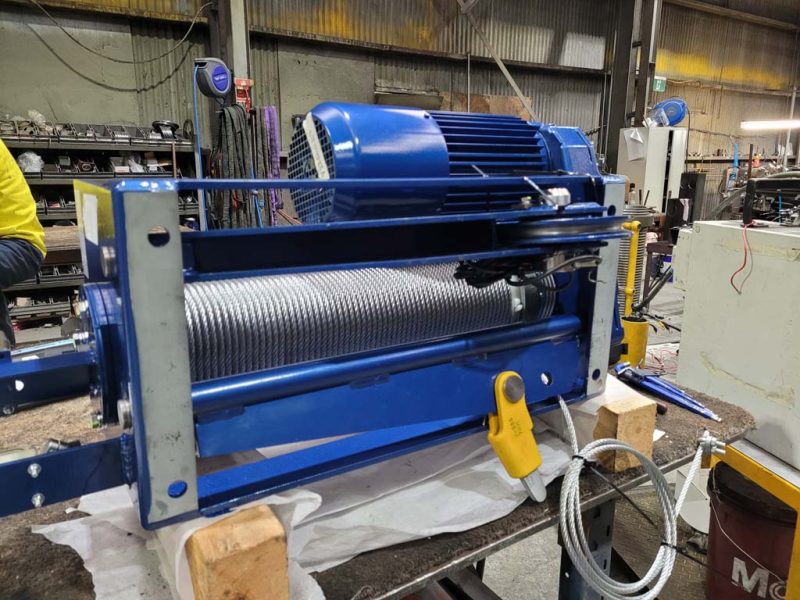
Optimise your crane design with Hydromech Hoist and Crane in Australia. Compare hoist mounting systems to improve hook height and safety for your site.
Selecting the correct hoist mounting systems remains a critical decision for facility managers seeking to maximise crane performance. Facility requirements and application demands must be evaluated to achieve a safe, long-term material-handling solution.
Specifying Industrial Hoist Mounting Systems
The mounting configuration directly influences the distribution of stress across the crane structure and determines the overall hook height. Proper alignment during installation prevents premature wear on trolley wheels and tracking components.
A well-specified hoist mounting system ensures the lifting unit operates within its intended design parameters for maximum efficiency. Maintenance schedules benefit from accessible mounting points that simplify routine inspections and lubrication tasks.
Comparing Foot-Mount vs Side-Mount Options
Choosing between foot-mounted and side-mounted configurations depends on the available clearance and the specific layout of the overhead gantry. A review of mechanical advantages helps determine the ideal placement for diverse load capacities:
- Foot-mount stability: This configuration involves bolting the hoist base to a flat surface to create a rigid foundation for high-capacity lifting.
- Side-mount flexibility: These units attach to the vertical face of a beam to accommodate restrictive ceiling heights without losing travel distance.
- Hook height optimisation: Side-mounted installations facilitate greater vertical lift by positioning the drum closer to the supporting structure.
- Stress distribution: Foot-mounted designs transfer vertical forces directly through the base plate to maintain perfect motor and gearbox alignment.
- Maintenance accessibility: Side-mount brackets allow technicians to reach the rope guide and limit switches more efficiently during scheduled inspections.
Engineering Standards for Crane Integration
Industrial crane operations require reliable hoist mounting systems that can withstand high-cycle use without compromising structural integrity. Foot-mounted units are frequently used in stationary winch applications or on top-running double-girder trolleys where maximum stability is paramount.
Hydromech Hoist and Crane considers compliance as the foundation of every build, ensuring all installations strictly adhere to Australian Standard AS 1418.1:2021 for verified stress limits. Our perspective prioritises structural safety, meaning we only recommend mounting configurations that have been rigorously tested for Australian industrial environments.
Our technical team identifies the most efficient placement for side-mounted hoists when working with monorails and single-girder cranes. This configuration allows the hoist body to sit parallel to the beam, effectively reducing the distance between the beam and the hook.
Explore our full inventory of high-performance lifting hardware and technical components engineered for Australian industrial standards.
Selecting the Ideal Lifting Configuration
Selecting the appropriate mounting style ensures that material-handling equipment remains compliant and efficient for years to come. Precise engineering at the design stage prevents costly downtime and premature component fatigue in heavy-duty environments.
Hydromech Hoist and Crane advocates for a balanced approach where specific site constraints dictate the selection of your hoist mounting systems. We assist in the transition from initial concept to a fully operational lifting solution that respects both safety margins and budget requirements.
Contact us to receive a technical consultation for your next industrial crane installation.
Related Blog Article: Industrial Hoist Technology Trends 2026: What Melbourne Manufacturers Need to Know
Optimized by: Netwizard SEO