
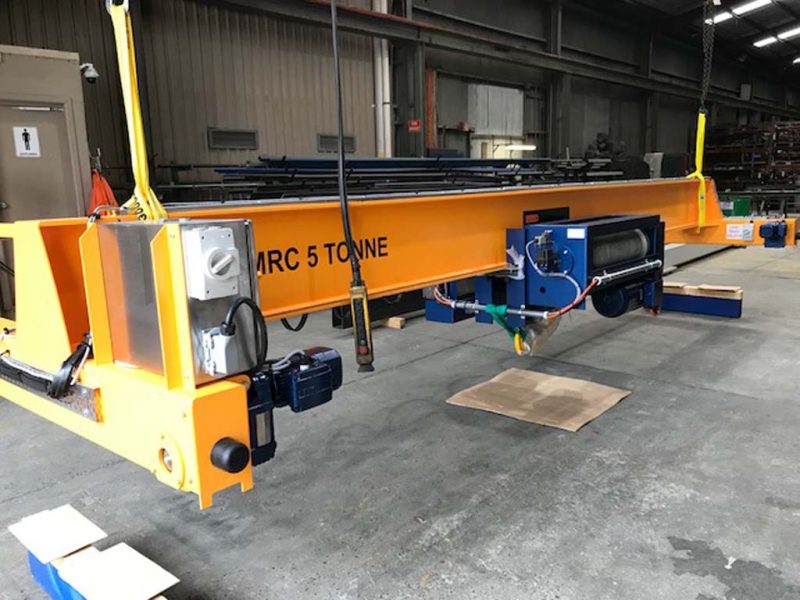
Improve overhead crane safety upgrades with Hydromech Hoist and Crane in Australia to support compliance and reliable crane performance across industries.
Industrial operations require high safety standards to maintain productivity. Implementing overhead crane safety upgrades ensures equipment remains compliant with Australian regulations. For businesses using heavy machinery, modern safety systems are the most effective way to mitigate risk and increase asset longevity.
In high-risk industrial settings, crane safety directly influences workforce protection, uptime, and regulatory compliance. Without structured safety systems in place, minor mechanical faults can escalate into serious incidents.
By proactively upgrading crane safety components, businesses reduce liability exposure and create safer, more predictable lifting environments.
Operator protection is the main goal of any safety engineering upgrade. Modern systems provide essential fail-safes that account for human error. Installing reactive safety technologies reduces the risk of dropped loads, creating a secure working environment for all staff.
Mechanical reliability and safety are closely linked. Unmitigated safety risks often lead to catastrophic equipment failure, resulting in expensive repairs and lost production. A proactive crane safety systems retrofit identifies potential points of failure early to prevent unplanned outages.
Hydromech Hoist and Crane provides technical enhancements to modernise existing lifting fleets. These upgrades focus on precision control and mechanical protection:
• Load Limiter and Overload Protection Systems: Sensors prevent the hoist from lifting loads exceeding the rated capacity. This protects the structural integrity of the bridge.
• Anti-Sway and Motion Control Enhancements: Variable Frequency Drives (VFDs) eliminate the pendulum effect, ensuring stable and predictable load travel.
• Limit Switches and End-of-Travel Protectors: Automated switches halt motion before physical contact with end stops occurs, preventing high-impact collisions.
• Emergency Stop, Alerts & Safety Interlocks: Integrated sirens and E-stop controls allow for immediate manual intervention during hazardous conditions.
Meeting Australian regulatory requirements is a fundamental responsibility for crane owners and facility managers. Safety upgrades play a central role in ensuring lifting equipment complies with current legislation.
Adherence to AS 1418 crane safety standards and AS 2550 is a legal mandate in Australia. These standards govern crane design, operation, inspection, and maintenance.
Adherence to AS 1418 crane safety standards and AS 2550 is a legal mandate in Australia. These standards dictate the design and safe use of hoisting equipment. Upgrading safety components ensures older machinery meets current overhead crane compliance Australia benchmarks.
Regulatory compliance relies on accurate record-keeping. Every safety upgrade must have technical documentation and certification. This provides necessary evidence for WorkSafe audits and confirms the equipment is fit for purpose.
Crane safety upgrades provide measurable operational benefits beyond regulatory compliance. By improving system control and reducing mechanical strain, upgrades enhance both worker safety and equipment durability.
Modern protection systems create a more predictable lifting environment, supporting efficient workflows while reducing exposure to risk.
• Reducing Operator Risk and Fatigue: M Modern operator protection equipment and high-precision controls improve ergonomics and line-of-sight, directly lowering the risk of fatigue-related incidents.
• Extending Crane Life and Performance: By preventing overloads and abrupt directional changes, safety upgrades reduce mechanical stress and component wear to effectively extend the equipment’s operational lifecycle.
Our team at Hydromech Hoist and Crane delivers engineered crane safety solutions in Australia. Our technical services include:
• Tailored Safety Engineering: System integration customised to specific site requirements.
• Certified Inspections: Professional crane safety inspection and upgrade audits to identify compliance gaps.
• Maintenance and Lifecycle Support: Structured programs designed to maintain safety system integrity.
A professional evaluation is the first step toward improving crane safety and reliability. Assessing current systems allows potential risks to be identified before they impact production or compliance.
Ensure your facility maintains peak safety standards through expert consultation and engineered overhead crane safety upgrades.
Contact us at Hydromech Hoist and Crane today to request a site safety evaluation.
Related Blog Articles:
Overhead Crane Safety: Using Limit Switches, Overload Protection, and Anti-Sway
Overhead Crane Compliance: AS 1418 & AS 2550 Checklist for Australian Businesses
Overhead Crane Maintenance: Year-End Inspection Checklist for Summer Shutdowns
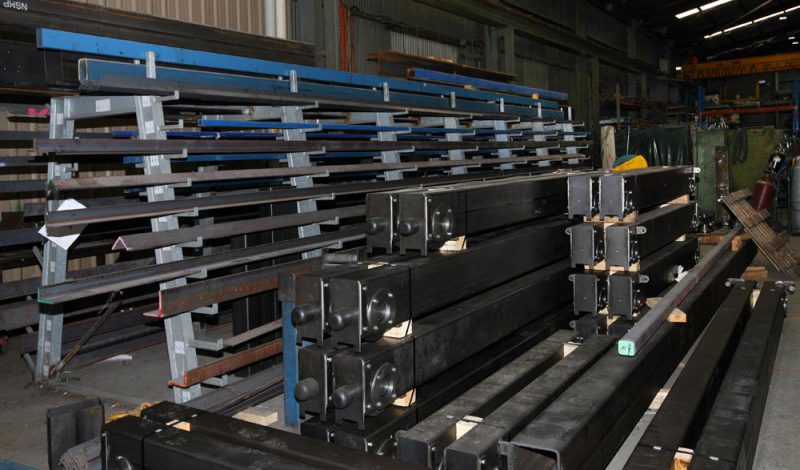
Reduce crane downtime with Hydromech Hoist and Crane in Australia through bogies and end carriages that support smooth and consistent travel performance.
Industrial cranes support high-demand lifting tasks across many operations, and their reliability depends on the condition of critical travel components such as bogies and end carriages. Maintaining these assemblies ensures efficient material handling and prevents costly operational delays.
End carriages support the bridge girder. They allow the entire crane system to move laterally along the gantry rails. These assemblies absorb heavy, dynamic loads during movement, speed changes, and stops. If these parts fail, it causes rapid rail wear, skewed travel, and emergency shutdowns. This severely hurts production schedules.
The bogie is often a part of the end carriage assembly. It is designed to spread the crane’s substantial weight over many wheels. It also helps keep proper alignment on the rail. Avoiding routine bogie inspections can speed up structural fatigue in the crane body itself. This will force expensive, unplanned repairs.
Crane travel systems face many problems. These issues harm their designed efficiency and safety. Systematically fixing these challenges is key to maintaining the lifespan of the installation.
Common performance degraders:
• Wheel Flange Wear: Too much friction between the wheel and the rail causes premature wear. This often shows that tracks are misaligned or parts are shaped incorrectly.
• Rail Surface Degradation: Pitting, uneven wear, or waves on the gantry rail cause rough movement. This adds stress to the entire travel mechanism.
• Bearing Failure: Contamination, lack of lubrication, or overheating can cause bearings to seize. This leads to the wheel locking up and possible derailment.
• Cracked Welds: High-stress zones on the end carriage structure can develop fatigue cracks. This weakens structural integrity and needs instant repair.
• Drive System Misalignment: Bad gear mesh or motor-to-gearbox misalignment introduces vibrations. It wastes energy and speeds up wear on the drivetrain.
Minimising unplanned downtime requires a strong plan for preventative maintenance. This plan must be data-driven. Optimising your crane’s bogies and end carriages should involve regular checks and specific fixes.
Strategies for optimal maintenance:
• Laser Alignment Surveys: Use precise laser tools to check and correct end carriage squareness, which prevents skewing and excessive side loads on the rails.
• Non-Destructive Testing (NDT): Apply magnetic particle or ultrasonic inspection on important welds to find hidden fatigue cracking before structural failure occurs.
• Vibration Monitoring: Set up condition-based monitoring programs that track gear train harmonics and bearing health, allowing for component replacement before a total breakdown.
• Controlled Lubrication Schedules: Use the correct, manufacturer-specified lubricants at exact times to prevent premature wear and overheating of critical parts.
• Wheel and Rail Profile Machining: Resurface wheels and rails to restore their correct design profile, ensuring the best contact area and greatly extending the component lifespan.
Hydromech Hoist and Crane conducts complete inspections and offers custom maintenance plans for our crane’s bogies and end carriages. Our professional team specialises in detailed alignment, repair, and replacement. We ensure your crane system operates at peak efficiency.
Contact us today to discuss your crane maintenance requirements.
Related Blog Article: Standard Bogies in Hoist and Crane Systems from Hydromech
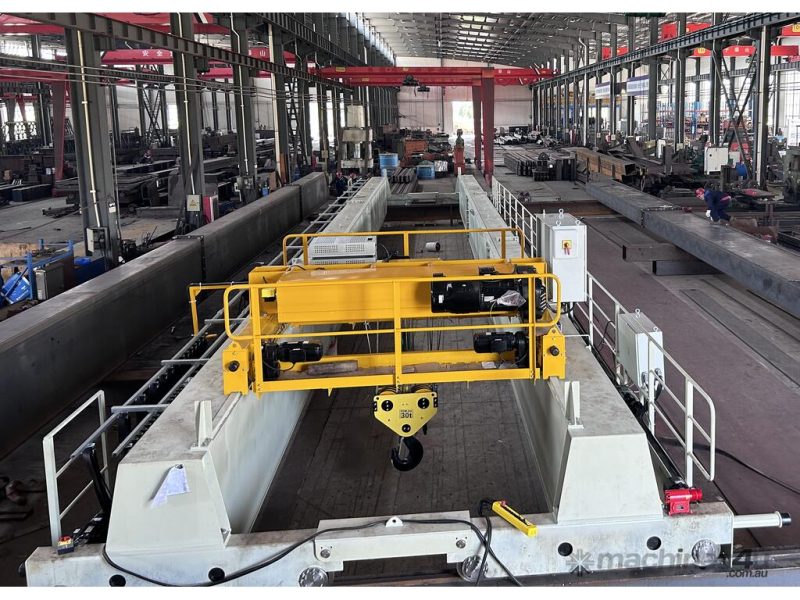
Hydromech Hoist and Crane provides Melbourne manufacturers with 2026-ready industrial hoist advancements supporting safer, smarter, and efficient lifting.
Industrial hoist innovation continues to accelerate across advanced manufacturing environments in Melbourne. The shift toward smarter, safer, and more automated lifting systems is shaping how facilities prepare for 2026. Hydromech Hoist and Crane supports manufacturers aiming to maximise uptime and equipment longevity through future-ready solutions.
Growth in automation across production floors is driving an increased need for precise load handling and improved operational visibility. Embedded sensors and connected monitoring platforms are now standard inclusions for manufacturers aiming to prevent component fatigue and unplanned shutdowns. Data capture at the hoist level also gives teams a clearer picture of utilisation patterns that influence maintenance cycles.
Integration of predictive diagnostics continues to progress through more capable onboard processors. Manufacturers gain faster insights into brake condition, drive motor efficiency, and load spectrum exposure without manual inspection. These advances contribute to improved lifecycle management and safer production workflows.
Manufacturers planning to update lifting equipment in 2026 are prioritising enhanced stability and better interoperability with existing systems. Improvements across control architecture and drive configuration support smoother transitions between handling tasks.
Modern hoist performance improvements commonly include:
• Advanced Load Monitoring: Real-time analytics support safer capacity utilisation.
• High-Precision Variable Drives: More accurate speed modulation reduces component stress.
• Modular Lifting Assemblies: Scalable hardware assists with future expansion.
• Improved Hoist Controllers: Responsive controls enable more precise load alignment.
• Enhanced Safety Logic: Smarter failsafe systems reduce operational risks.
Compliance requirements are tightening, mandating that manufacturers adopt new technologies aligning with updated safety benchmarks. Australian Standards, specifically the AS 1418 series, continue to evolve, reflecting a necessary convergence with international best practices.
• Limit State Design: New standards mandate shifting to the limit state design method for a more rigorous and reliable assessment of structural safety factors.
• Mandatory Digital Logging: Future mandates require industrial hoists to include tamper-proof digital records of operational cycles and fault codes, facilitating simpler compliance audits.
• Enhanced Braking Redundancy: Designers must incorporate superior braking and redundancy mechanisms to ensure fail-safe performance under maximum load, even during primary power failure.
• ISO Harmonisation: Ongoing revisions align Australian specifications with corresponding International Organisation for Standardisation (ISO) requirements, easing the procurement and integration of globally sourced components.
• Inspecting for Fatigue: Comprehensive inspection regimes now focus heavily on identifying material fatigue and wear across critical load-bearing structures, ensuring equipment integrity.
Integrating these 2026 lifting technologies represents a strategic investment in operational reliability and safety culture. Melbourne manufacturers must transition now from a reactive maintenance approach to proactive technological deployment if they wish to unlock true efficiency gains.
Hydromech Hoist and Crane provides specialised expertise in the design, installation, and compliance management of advanced overhead cranes and industrial hoist systems, ensuring your facility is future-ready. We deliver sustained expertise to Melbourne businesses upgrading their lifting requirements for 2026.
Contact us for technical guidance on upcoming equipment upgrades.
Related Blog Article: Buy Nante NHA Wire Rope Hoists in Australia – 3.2T, 5T, 6.3T & 10T Models In Stock Now!
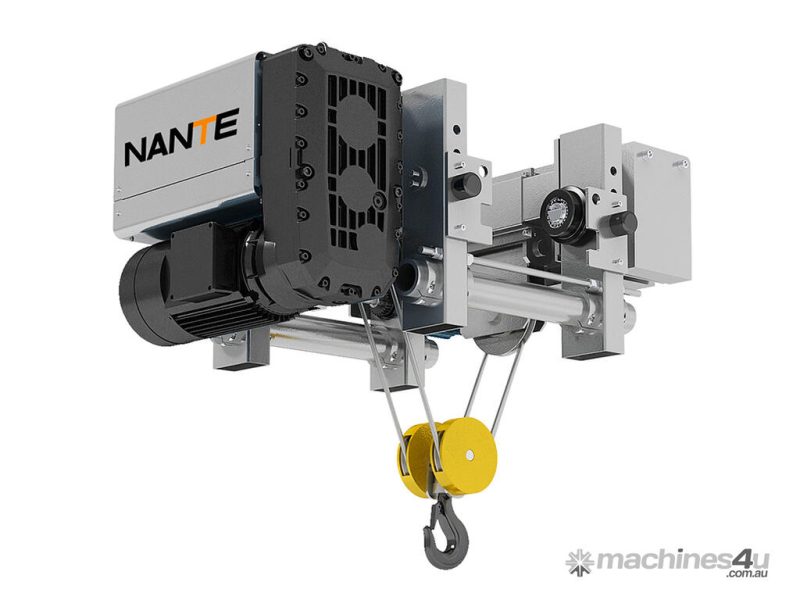
Looking for reliable industrial lifting solutions in Australia? Hydromech Hoist & Crane supplies precision-engineered NANTE hoists for every application.
Hoisting systems are integral to industrial lifting operations across manufacturing, mining, and construction sectors. NANTE hoists are designed for demanding industrial environments, offering exceptional precision, safety, and load control. Hydromech Hoist & Crane provides an extensive selection of these systems engineered to meet Australia’s rigorous operational standards.
Industrial lifting operations require precision-engineered systems tailored to different load capacities and working environments. NANTE hoists are available in multiple configurations, each designed to optimise performance, safety, and efficiency across varied industrial applications.
• Wire Rope Hoists: Wire rope hoists deliver superior lifting precision and durability for high-capacity industrial applications. Their flexible steel cables and drum systems provide smooth vertical movement, making them ideal for continuous, heavy-duty operations such as manufacturing and steel fabrication.
• Chain Hoists: Chain hoists are compact lifting units engineered for medium-load handling and confined workspaces. Their alloy steel chains and geared lifting mechanisms ensure consistent performance with minimal maintenance, suitable for workshops, assembly lines, and material handling tasks.
• Open Winch Systems: Open winch systems offer maximum load control and versatility for large-scale industrial projects. These systems are designed for custom configurations and heavy lifting, often used in shipyards, power plants, and structural assembly operations where precision and reliability are critical.
The mechanical design of NANTE hoists ensures optimal load distribution and precision control across all lifting motions. Advanced braking systems, dual-speed motors, and reinforced gear mechanisms enhance operational stability and reduce wear under heavy stress conditions. Each model undergoes extensive quality testing to meet our stringent industrial safety standards.
Compliance and technical assurance of NANTE hoists are governed by the Australian Standards AS 1418, a comprehensive framework for crane, hoist, and winch design. The standard specifies rigorous criteria for structural integrity, testing methods, and operational safety across industrial lifting systems. Meeting AS 1418 requirements demonstrates a commitment to engineering excellence and adherence to nationally recognised performance benchmarks.
Efficient lifting relies on the precise integration of hoist components and controls. Each NANTE hoist model incorporates key features that promote operational consistency, including advanced motor drives and intelligent control systems.
• Load Brake Systems – Deliver precise and reliable stopping control under variable load conditions, ensuring operational stability during lifting and lowering cycles.
• Gear Mechanisms – Constructed from hardened alloy steel to withstand high torque and repetitive motion without deformation. Precision-machined gears reduce friction and wear, extending the overall service life of the hoist.
• Wire or Chain Configurations – Designed to match specific lifting environments and load capacities for optimal performance, ensuring uniform load distribution and consistent tensile strength under heavy-duty operations.
• Control Interfaces – Feature ergonomic and responsive controls that enable operators to manage hoist speed, direction, and motion with accuracy.
• Safety Limit Switches – Function as automatic safeguards to prevent over-travel, overload, and potential mechanical failure with industrial safety standards while protecting both equipment and personnel.
Hydromech Hoist & Crane delivers industry-grade lifting equipment engineered for precision, durability, and full compliance with Australian standards. Our NANTE hoists provide dependable performance across diverse industrial operations, from manufacturing to heavy construction. Each system is designed to enhance safety, optimise load handling, and extend operational efficiency.
Contact us today to discuss your lifting requirements and explore the most suitable hoisting solutions for your site.
Related Blog Article: Lifting and Production Specialist: International-Standard Hoists & Cranes for Heavy Industries
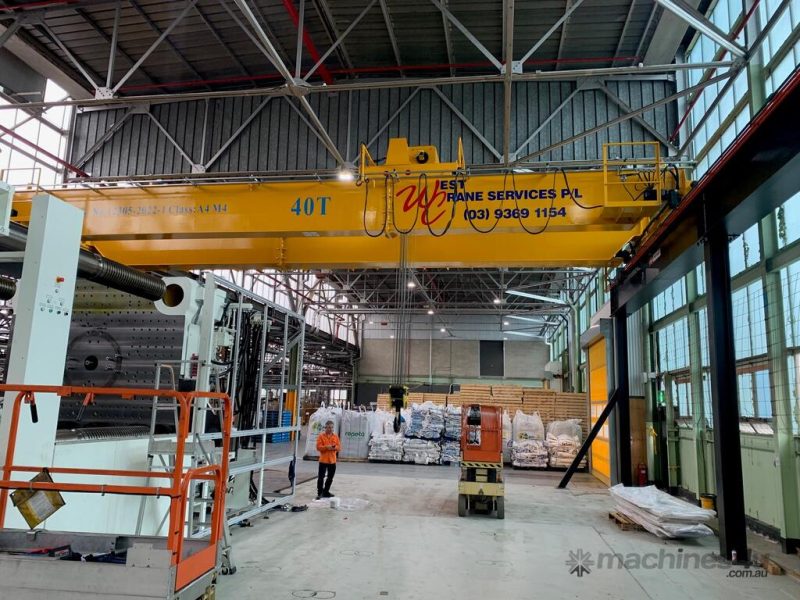
Prepare for summer shutdowns with Hydromech Hoist and Crane’s certified overhead crane maintenance and inspection services in Australia for maximum safety.
Routine overhead crane maintenance is essential before the summer shutdown period. High temperatures, heavy loads, and extended idle periods can impact crane performance if maintenance is neglected. Conducting a year-end inspection ensures safety, reliability, and compliance once operations resume.
The first step in year-end preparation is assessing each crane component for wear or damage. Inspecting wire ropes, end trucks, bridge beams, and electrical connections prevents failures during the next production cycle. A structured inspection report helps identify components that require replacement or calibration to maintain lifting accuracy.
Lubrication schedules must be updated to account for summer conditions. Heat can degrade lubricants faster, reducing their protective properties. Ensuring all bearings, gears, and moving joints are serviced minimises friction and mechanical fatigue throughout the shutdown period.
Electrical systems require detailed evaluation during overhead crane maintenance. Loose terminals, exposed wires, or corroded contacts can lead to voltage drops or short circuits under load. It is recommended to perform a continuity test and visual inspection of the control panels, limit switches, and circuit breakers.
Mechanical integrity is equally crucial. Misaligned gears, brake assemblies, and trolley mechanisms must be adjusted to manufacturer tolerances to maintain smooth performance. Calibration of load indicators, limit switches, and speed controls confirms operational accuracy and should be documented as part of the year-end inspection checklist.
Load testing during overhead crane maintenance. Year-end testing ensures that structural components, hoists, and safety systems operate efficiently and remain within safe working limits. Dynamic and static load tests should be scheduled and accurately recorded as part of the annual inspection process.
Calibration of load indicators, limit switches, and speed controls ensures accurate measurement and consistent crane performance. Neglecting these checks can lead to unsafe lifting operations and reduced equipment reliability, as noted in Safe Work Australia’s Guide to Inspecting and Maintaining Cranes. All calibration results must be recorded in the annual inspection log to maintain traceability and support long-term operational safety.
A structured inspection checklist ensures no detail is overlooked during shutdown. Before closing operations, consider these essential checks:
• Structural integrity: Inspect beams, joints, and welds for visible cracks, corrosion, or deformation that may compromise crane stability and load-bearing capacity.
• Hoist and trolley systems: Examine hoist drums, load chains, and trolley wheels for uneven wear, ensuring smooth operation and alignment during lifting cycles.
• Electrical components: Verify insulation resistance, terminal connections, and control wiring to prevent faults or short circuits during startup.
• Hydraulic and pneumatic systems: Check hoses, cylinders, and valves for leaks, maintaining proper fluid levels and operating pressures for consistent performance.
• Safety systems: Test limit switches, emergency stop functions, and audible alarms to confirm full responsiveness and compliance with safety standards.
A fully maintained crane fleet guarantees reliability, safety, and performance across every lifting operation. At Hydromech Hoist and Crane, our team delivers certified maintenance and inspections for our Australian-engineered cranes, ensuring each unit remains compliant and efficient.
Prepare your equipment for 2026 with professional servicing that enhances the longevity and precision of every crane in operation. Contact us today to schedule your summer shutdown inspection.
Related Blog Article: Overhead Crane Manufacturer Australia: Enhancing Container Handling and Cargo Flow in Ports