
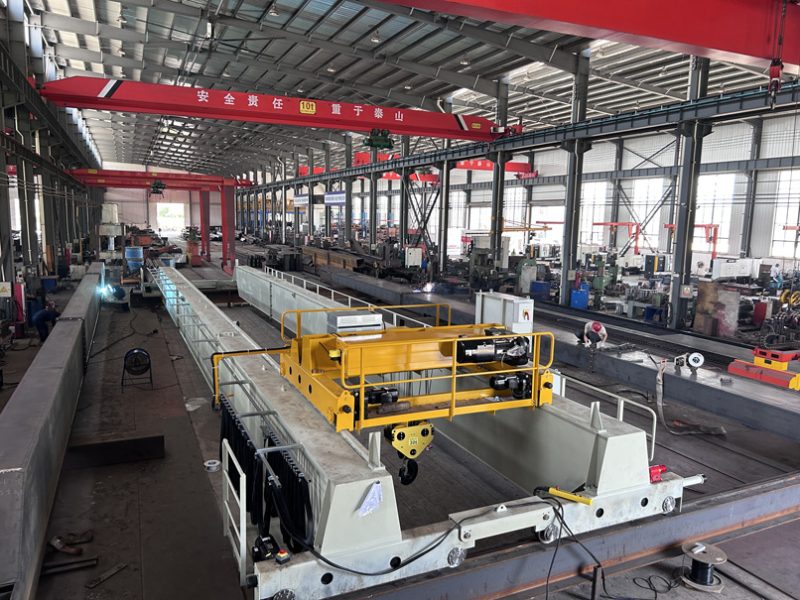
Improve load handling with factory lifting systems from Hydromech Hoist and Crane in Australia for safe lifting capacity in industrial facilities.
Production environments depend on lifting equipment that can manage heavy loads safely and consistently. Facilities that install factory lifting systems must evaluate equipment capacity carefully to avoid operational disruption and unnecessary mechanical strain. Capacity assessment supports safe material handling while keeping production processes stable.
Manufacturing facilities operate with lifting tasks that vary in weight, frequency, and movement patterns across production zones. Engineers review load characteristics, lifting height, and duty cycle requirements when assessing factory lifting systems for a specific facility.
Operational layout also affects equipment capacity planning. Structural supports, workstation spacing, and material flow paths influence how lifting equipment integrates into existing production processes.
Capacity evaluation considers several operational conditions that influence equipment selection and long-term performance. Facilities typically review the following factors before installing lifting equipment:
Engineering assessment examines structural components, hoist specifications, and operational demands to confirm equipment suitability. Facilities that evaluate factory lifting systems carefully can reduce strain on lifting equipment while maintaining stable production handling.
Australian workplace guidance also influences lifting equipment selection and safe operation. Hydromech Hoist and Crane considers recognised plant safety guidance, including Safe Work Australia recommendations, when discussing lifting equipment requirements with industrial clients.
Our team designs and manufactures lifting equipment used across manufacturing, engineering, and processing environments. Our engineering perspective focuses on aligning lifting equipment capacity with real operational demands inside industrial facilities.
Careful capacity planning supports safe load handling and dependable equipment performance in production environments. Facilities that review lifting requirements early can reduce operational interruptions and maintain consistent material movement.
Hydromech Hoist and Crane manufactures factory lifting systems suited to industrial lifting conditions across Australia. Our engineering team works with manufacturers, fabricators, and industrial facilities that require lifting equipment designed around practical production needs.
Contact us to discuss lifting equipment suited to your facility.
Related Blog Articles:
Overhead Crane Compliance: AS 1418 & AS 2550 Checklist for Australian Businesses
Overhead Crane Safety: Using Limit Switches, Overload Protection, and Anti-Sway
Overhead Crane Maintenance: Year-End Inspection Checklist for Summer Shutdowns
Industrial Hoist Technology Trends 2026: What Melbourne Manufacturers Need to Know
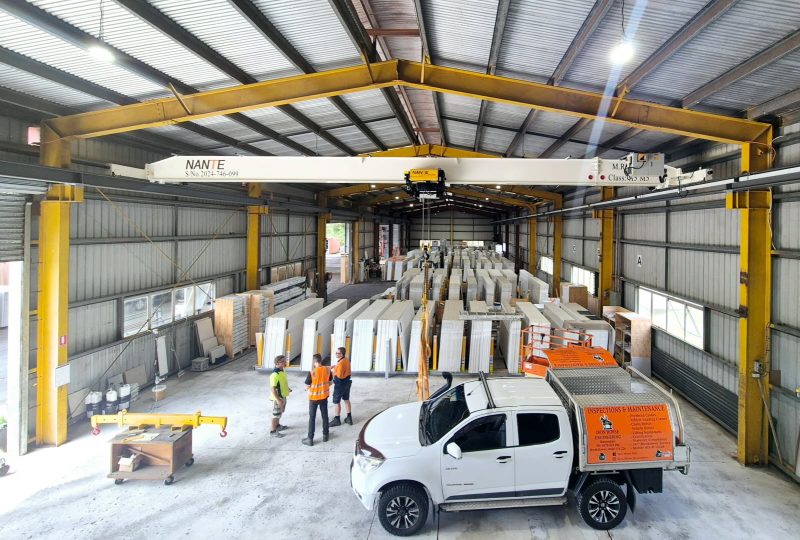
Upgrade your facility with overhead crane workflow integration in Melbourne. Hydromech Hoist and Crane ensures compliance and seamless material handling.
Industrial productivity depends on controlled material movement and coordinated lifting systems. Overhead crane workflow integration strengthens internal logistics by aligning crane travel paths with fabrication areas, storage zones, and dispatch sequencing. Structured planning helps reduce idle time, limits unnecessary load handling, and promotes steady throughput across operational environments.
Manufacturing schedules require lifting systems that operate in sync with production flow. Overhead crane workflow integration connects overhead crane systems with workstation positioning and load sequencing to support material handling efficiency across departments. Defined lifting zones and mapped crane travel routes assist in maintaining safer load transfer and consistent production continuity.
Clear coordination between operators, supervisors, and maintenance teams reduces congestion within high-traffic areas. Structured system alignment also supports predictable cycle times while maintaining mechanical reliability and operational clarity.
Effective integration begins with a practical review of site layout, lifting demand, and structural capacity. Facility managers should assess workflow patterns and crane classification requirements before installation or upgrades.
The following technical considerations influence long-term performance:
These measures align with accepted Australian engineering practices and support compliance-focused lifting system design.
Existing facilities require staged evaluation before structural or mechanical modifications are introduced. Structural integrity, runway alignment, electrical capacity, and lifting frequency must be assessed before proceeding with overhead crane workflow integration.
Compliance with Australian Standards, including AS 2550 and AS 1418 governing crane design and operation, remains fundamental to system installation. At Hydromech Hoist and Crane, we integrate these crane compliance requirements into engineered systems to support safe operation and regulatory alignment across the Australian industry.
Integration must complement established production processes without creating operational strain. We evaluate spatial limitations, lifting requirements, and workflow sequencing to ensure crane installations enhance efficiency while maintaining structural and mechanical integrity.
Consistent throughput relies on lifting systems that align with operational structure rather than function independently of it. Planned coordination between crane systems and production flow supports safer lifting conditions and predictable material movement across industrial sites.
Hydromech Hoist and Crane integrates engineered lifting systems tailored to Australian operational requirements. Through structured system design, installation, and ongoing servicing, we support improved industrial performance through overhead crane workflow integration that reflects practical site demands and compliance expectations.
Contact us to optimise material handling and strengthen production efficiency with engineered crane systems built for the Australian industry.
Related Blog Articles:
Engineered Overhead Crane Safety Upgrades for Operator Protection and Equipment Reliability
Overhead Crane Manufacturer Australia: Enhancing Container Handling and Cargo Flow in Ports
Overhead Crane and Hoist Maintenance for Seamless Heavy Industry Performance
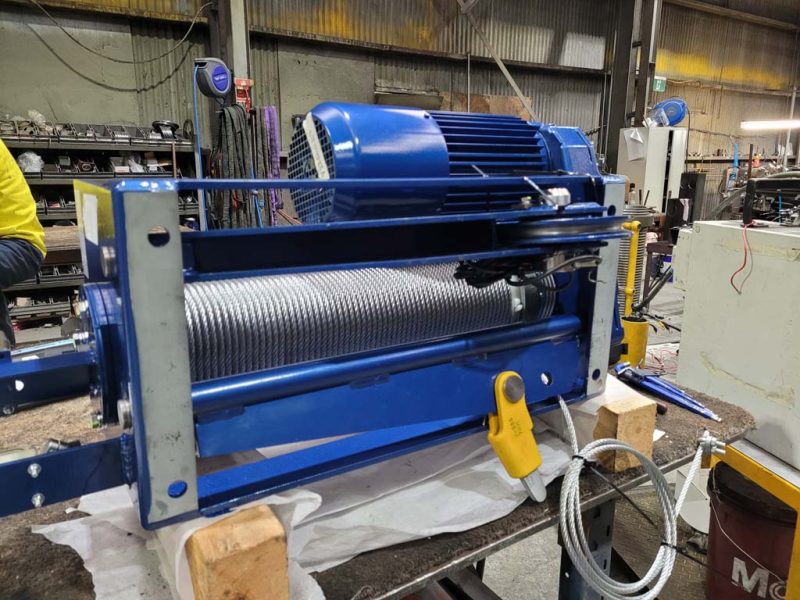
Optimise your crane design with Hydromech Hoist and Crane in Australia. Compare hoist mounting systems to improve hook height and safety for your site.
Selecting the correct hoist mounting systems remains a critical decision for facility managers seeking to maximise crane performance. Facility requirements and application demands must be evaluated to achieve a safe, long-term material-handling solution.
The mounting configuration directly influences the distribution of stress across the crane structure and determines the overall hook height. Proper alignment during installation prevents premature wear on trolley wheels and tracking components.
A well-specified hoist mounting system ensures the lifting unit operates within its intended design parameters for maximum efficiency. Maintenance schedules benefit from accessible mounting points that simplify routine inspections and lubrication tasks.
Choosing between foot-mounted and side-mounted configurations depends on the available clearance and the specific layout of the overhead gantry. A review of mechanical advantages helps determine the ideal placement for diverse load capacities:
Industrial crane operations require reliable hoist mounting systems that can withstand high-cycle use without compromising structural integrity. Foot-mounted units are frequently used in stationary winch applications or on top-running double-girder trolleys where maximum stability is paramount.
Hydromech Hoist and Crane considers compliance as the foundation of every build, ensuring all installations strictly adhere to Australian Standard AS 1418.1:2021 for verified stress limits. Our perspective prioritises structural safety, meaning we only recommend mounting configurations that have been rigorously tested for Australian industrial environments.
Our technical team identifies the most efficient placement for side-mounted hoists when working with monorails and single-girder cranes. This configuration allows the hoist body to sit parallel to the beam, effectively reducing the distance between the beam and the hook.
Explore our full inventory of high-performance lifting hardware and technical components engineered for Australian industrial standards.
Selecting the appropriate mounting style ensures that material-handling equipment remains compliant and efficient for years to come. Precise engineering at the design stage prevents costly downtime and premature component fatigue in heavy-duty environments.
Hydromech Hoist and Crane advocates for a balanced approach where specific site constraints dictate the selection of your hoist mounting systems. We assist in the transition from initial concept to a fully operational lifting solution that respects both safety margins and budget requirements.
Contact us to receive a technical consultation for your next industrial crane installation.
Related Blog Article: Industrial Hoist Technology Trends 2026: What Melbourne Manufacturers Need to Know
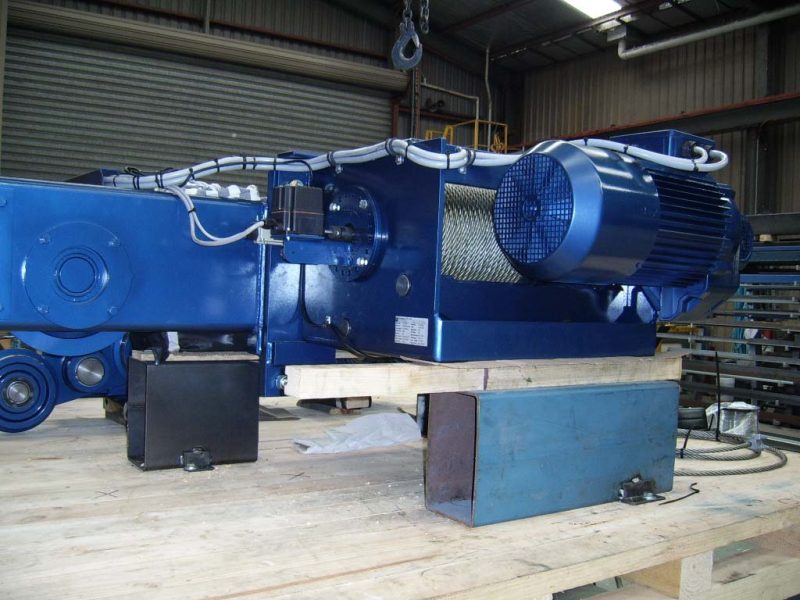
Support precise material handling with torsion-beam trolleys by Hydromech Hoist and Crane in Australia for reliable performance in manufacturing workflows.
Manufacturing facilities depend on lifting systems that deliver steady movement and predictable load behaviour. Torsion-beam trolleys support controlled horizontal travel, allowing suspended loads to be positioned accurately across production areas. This level of control contributes to safer handling practices while maintaining workflow efficiency.
Manufacturing operations require lifting equipment that maintains alignment under changing load conditions. Torsion-beam trolleys are designed to minimise beam deflection, supporting smooth travel and balanced load distribution along overhead crane systems. This structural stability supports accuracy during repetitive lifting tasks.
Production environments benefit from lifting components that integrate reliably with existing crane arrangements. These trolley systems are commonly used with manual or powered hoists, enabling controlled positioning without introducing instability. Their construction supports durability and consistent performance in high-use manufacturing settings.
Controlled load movement relies on equipment that performs consistently under continuous operating conditions. Manufacturing facilities benefit from trolley systems that support stability, alignment, and operational safety across daily lifting activities.
The following features outline how torsion-based trolley systems support efficient manufacturing workflows.
Manufacturing facilities require lifting solutions that balance precision with long-term reliability. Torsion-beam trolleys are commonly applied in metal fabrication workshops, machining operations, and production assembly areas where controlled lateral movement is required. Their design supports accurate load placement without adding unnecessary complexity to crane systems.
Operational benefits include predictable performance and reduced maintenance demands across continuous production cycles. These trolley systems support compliance with Australian safety expectations while maintaining steady material flow. Integration with engineered crane solutions contributes to long-term operational efficiency.
At Hydromech Hoist and Crane, we focus on lifting systems that operate reliably within real manufacturing environments. Torsion-beam trolleys form part of our broader crane and lifting solutions, supporting stable load movement, system compatibility, and consistent performance across industrial workflows. Manufacturing facilities seeking dependable trolley and crane components can improve day-to-day efficiency through proven lifting systems designed for long-term use.
Contact us for practical support and lifting solutions aligned with your operational requirements.
Related Blog Article:
Overhead Crane Safety: Using Limit Switches, Overload Protection, and Anti-Sway
Solving Common Handling Challenges with the Overhead Crane MRC 12.5T for Large Industrial Loads
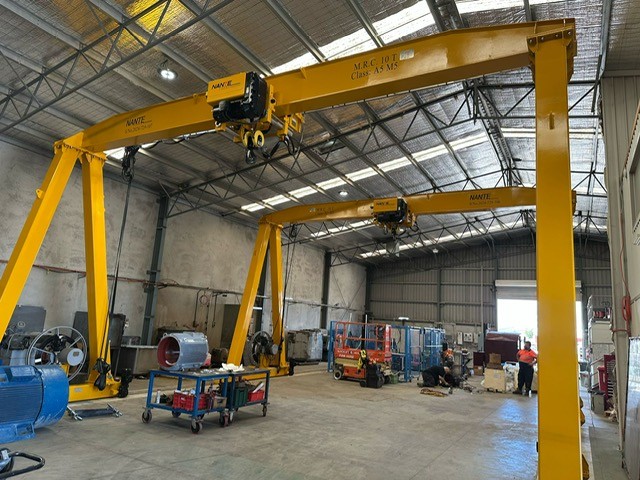
Plan custom industrial crane builds in Melbourne using modular crane kits from Hydromech Hoist and Crane to enable flexible system integration.
Industrial facilities across Melbourne often require lifting systems designed around existing building structures, production layouts, and specialised load-handling requirements. Rather than purchasing fully assembled cranes, many manufacturers and engineering contractors choose overhead crane kits in Melbourne to support custom-built lifting systems.
These modular supply solutions allow engineering teams to integrate bridge components, end carriages, and hoisting systems into new or existing structures while maintaining full control over system design and installation. For facilities where structural constraints or operational workflows require tailored lifting equipment, crane kits offer a flexible and efficient alternative.
Custom industrial crane installations often need to integrate with existing runway beams, building columns, or specialised production equipment. In these situations, sourcing overhead crane kits provides contractors and engineering teams with the core lifting components required to fabricate a complete system suited to the site.
Crane kits typically include essential bridge components such as end carriages and mounting assemblies, designed to accommodate hoists and electrical systems selected during the final design stage. This approach enables fabrication teams to construct lifting systems that align precisely with the facility’s structural layout and operational requirements.
By supplying modular crane components rather than preassembled systems, crane kits support greater flexibility in system configuration, fabrication, and installation planning.
A modular crane kit is particularly suited to projects where lifting systems must integrate into existing buildings or specialised industrial environments. These kits allow engineers and contractors to maintain design flexibility while adapting the crane structure to site conditions.
Modular crane kits are commonly used in situations such as:
• Existing facilities with restricted headroom or fixed structural layouts
• Projects requiring non-standard crane spans
• Retrofit installations where major structural modifications must be avoided
• Industrial sites with in-house engineering or fabrication capabilities
• Staged facility upgrades aligned with budget planning or operational expansion
For these projects, sourcing overhead crane kits allows engineering teams to develop lifting systems tailored to the exact needs of the site.
Crane kits streamline procurement for custom builds by supplying only the essential structural components required to assemble the crane system. This reduces unnecessary fabrication while enabling contractors to source compatible hoists and control systems suited to the application.
For Melbourne industrial facilities planning custom lifting systems, crane kits provide several advantages:
• Manufacturing Facilities: Modular crane kits adapt to evolving production layouts and allow lifting systems to be configured around machinery, process lines, and specialised work areas.
• Warehousing and Logistics: Kits can be integrated into wide-span buildings and storage facilities, supporting efficient material handling without requiring major structural changes.
• Workshops and Fabrication Facilities: Compact modular crane components allow lifting systems to be installed in confined workspaces or multi-use production areas.
By supporting customised crane design, these systems help improve material flow, space utilisation, and operational efficiency across industrial environments.
Successful crane installations require careful planning to ensure the selected components integrate effectively with the facility.
Before sourcing overhead crane kits, project teams should consider several key factors:
• Load capacity requirements: The crane system must be specified to safely handle the maximum operational loads expected within the facility.
• Structural interface planning: Runway beams, columns, and support structures must be evaluated to ensure compatibility with the crane bridge configuration.
• Electrical and control integration: Hoist controls, power supply requirements, and system interfaces should be reviewed early to avoid installation delays.
• Installation coordination: Engaging engineering teams or installation partners early helps confirm that component selection and system layout align with the overall project schedule.
Hydromech supports industrial lifting projects by supplying overhead crane kits in Melbourne for custom-built systems. Rather than delivering turnkey installations, the company provides precision-manufactured modular crane components that allow engineering teams and system integrators to manage design, fabrication, and installation.
This supply-focused approach enables contractors and industrial operators to build lifting systems that integrate effectively with existing structures, production workflows, and specialised operational requirements.
For information about sourcing modular crane components for your project, contact Hydromech Hoist and Crane.
Related Blog Articles:
Solving Common Handling Challenges with the Overhead Crane MRC 12.5T for Large Industrial Loads
Industrial Hoist Technology Trends 2026: What Melbourne Manufacturers Need to Know
Understanding NANTE Hoists: Wire Rope, Chain, and Open Winch Systems for Industrial Use
Overhead Crane Safety: Using Limit Switches, Overload Protection, and Anti-Sway